
Last week I attended a webinar about what’s considered a good ‘daily dose’ of meditation?
It’s an interesting idea…
A dose of meditation.
But the words meditation, medicine and medication all share the same Latin root: medicus.
Meaning ‘to cure’ and originally ‘to measure’.
If you think about it, both meditation and medication seek to restore measured balance to life, but in vastly different ways.
The webinar was based around the research of psychologist Dr Sarah Strohmaier, from Victoria University.
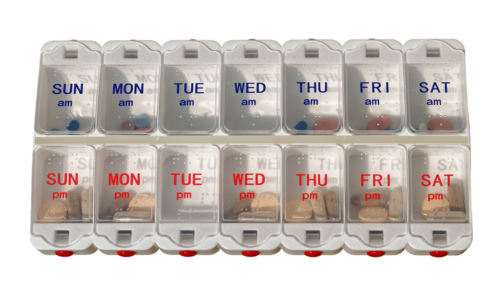
Before I reveal the conclusion about the best dose, I thought I’d tell you a bit about my own journey.
When I applied to study to become a meditation & mindfulness teacher, it was expected I would develop a daily practice (if I didn’t have one already).
My daily practice at that time was a bit ad-hoc, but I would always try to do the Calm app’s ten minute guided meditation.
Through my course, I had to keep a Personal Meditation Practice log book…
Noting how many times I meditated each week, the duration of each session and the different techniques used…
We had a ‘dump’ room at the back of our home that my husband helped convert into a meditation room.
Having my own space, candles etc. was a huge help.
It became clear by session five I was expected to meditate 25+ minutes daily…
Which by that time I was doing…
In session six I was paired up with another student at the same point in her studies.
We had to record and spontaneously guide each other in meditation (for approximately 30 minutes) I was terrified!
By the end of the course I was able to meditate for 30-45 minutes daily…
Sometimes longer.
So is that the perfect meditation dose?
Does it match the findings of Dr Strohmaier?
Not really…
Because, despite all her research, she didn’t have a definitive answer…
It depends on so many different factors.
Why you have come to meditation, and what you want out of it.
There are so many different programs – guided in-person or online sessions…
Informal sessions you attend when you can…
Formal programs and courses for a set number of weeks.
If you are new to mindfulness and meditation – shorter sessions may be better, especially if you are developing your own practice.
But if you’re attending a group you might find longer sessions more helpful.
Esentially the answer is – one size, doesn’t fit all!
One aspect of her research that interested me was looking at formal meditation versus a more informal practice (for example practising mindfulness in everyday life).
The conclusion to this seemed to reveal that a combination of both was best.
So you might attend or follow a formal guided meditation one day…
And practise mindfulness a few times a week – noticing what’s happening in the present moment.
Then there was the comparison of quantity versus quality.
Quantity in terms of time is quite easy to measure…
But quality…? Much harder.
You might get more out of five minutes, than someone else who sits regularly for an hour.
It depends on you – what you want – and understanding everyone is unique.
The key question at the end of the day seems to be:
What works for you?
The only way to find that out, is to try lots of different practices and techniques…
Guided, self-guided, shorter, longer…
And whatever works for you…
Works for you.
Ann 🙏